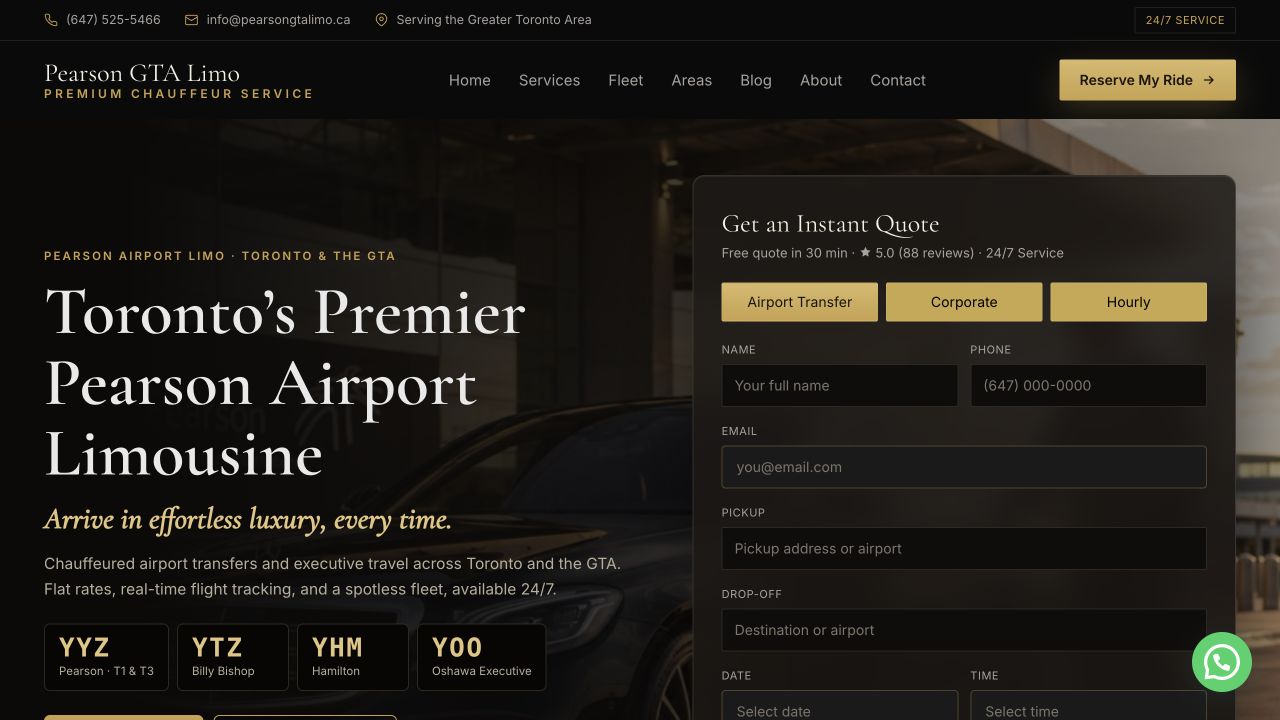
Inspect a real mobile journey
Open a published project on a phone. Read the fleet detail, find the service area and try the contact route without submitting a real booking. Check whether the phone control is tappable, labels are visible and the form explains the next step. Ask the designer for controlled submission evidence and an error-state example.
Check what the mockup actually represents
A portfolio mockup should identify the real website, capture date and project scope. A visual redesign example is not proof of booking growth. If results are shown, ask for the reporting window and metric definition. Search visits, enquiries and completed rides must not be presented as interchangeable numbers.
Verify the reservation handoff
Ask whether the proposed method is a vendor link, embed or supported API. Request installation-specific test evidence, including duplicate requests and unavailable vehicles. Do not accept “native integration” as a blanket promise across software vendors. Identify who maintains the connection and what is excluded from the build.
Agree content and ownership
Provide genuine vehicle images, approved passenger and luggage limits and current booking terms. Agree access, domain and content ownership, source handoff and ongoing maintenance. A rebuild should inventory existing URLs and preserve useful search intent with equivalent redirects where needed. It should not discard established route content simply to use a prettier template.
Define the acceptance check
Review mobile, tablet and desktop layouts; keyboard navigation; meaningful labels; form validation; loading performance; and confirmed booking state. Ask for dated evidence. A perfect automated score does not establish full accessibility or a working dispatch handoff. The final review should cover the actual passenger task, not just the first screen.
Apply this to your actual operation.
Use the relevant service scope and your operating market guide to prepare the next step. The booking calculator models your entered assumptions; a free meeting can address the real workflow.
Editorial guidance updated 6 October 2026. Examples are illustrative unless explicitly identified as a documented project result.