Define a qualified enquiry
Specify what makes a contact useful: a genuine customer, a supported route, a relevant date and a suitable vehicle requirement. Exclude spam, duplicate contacts and requests you do not serve. A phone click can indicate intent, but it does not prove a connected call. Keep those states separate in the event dictionary.
Use the correct denominator
For an illustrative example, $600 in ad spend divided by 20 qualified enquiries is $30 per enquiry. If five of those enquiries become confirmed bookings, advertising spend per confirmed booking is $120. These numbers demonstrate arithmetic, not a market benchmark. Management fees and other marketing costs require their own explicit inclusion.
Reconcile the booking record
Use the authoritative reservation or payment record before reporting won bookings or revenue. Document how phone and form contacts are matched and deduplicated. If an external booking tool does not expose reliable completion events, report the gap rather than converting every click into a ride. Review the same reporting period and attribution rule consistently.
Separate revenue from contribution
A booking’s revenue does not equal profit. Vehicle delivery costs, marketing costs, overhead and taxes differ. The website calculator models entered operating margin and marketing assumptions; it does not infer dispatch costs. A positive revenue total can coexist with negative contribution after acquisition spend.
Decide what to change
Poor enquiry quality calls for search-term, geography and landing-page review. Good enquiries but few accepted journeys call for a booking and capacity review. Increasing spend before identifying the constraint can amplify the wrong traffic. Compare channels using the same qualification rules and disclose unmeasured contacts.
What do limo keywords cost on Google Ads?
There is no fixed price. Google Ads runs an auction for every search. Google's actual CPC page explains that you usually pay less than your maximum bid: roughly what it takes to beat the advertiser below you and clear Google's quality thresholds. Ads above the organic results usually cost more per click. Better ad relevance and a better landing page lower what you pay for the same position.
So the price of "airport limo" in your city depends on how many local operators bid, how much they bid and how good their ads and pages are. Two honest data points I can share:
| Keyword or campaign | Cost per click | Source and date |
|---|---|---|
| Airport-limo search campaign (Durham Region, Ontario) | about CA$1.53 average | Our 30-day test: CA$534.60 / 350 clicks |
| "limo dispatch software" | US$32.72 | DataForSEO, US, 27 Sep 2026 |
| "limo software" / "limousine software" | US$25.45 | DataForSEO, US, 27 Sep 2026 |
| "limo booking / reservation software" | US$20.68 | DataForSEO, US, 27 Sep 2026 |
| "limo anywhere app" | US$9.02 | DataForSEO, US, 27 Sep 2026 |
Read the software rows carefully. Those are searches by limo owners shopping for software, so software vendors bid on them. They are not passenger searches and an operator should not bid on them. I include them because they show how click prices follow buyer value: one software customer is worth a lot to a vendor, so the click is expensive. Your passenger keywords follow the same logic in your own market.
The Durham figure is one campaign in one region over 30 days. It is not a benchmark for Toronto, New York or London. To estimate your own market, use Google's Keyword Planner, which shows the average cost for an ad to show on a keyword in the area you choose.
How your daily budget really works
Google's budget help page says a campaign can spend up to 2 times its average daily budget on a busy day, and you are billed no more than 30.4 times the daily budget for the month. At CA$15 a day, the most you would be billed in a month is CA$456 (15 × 30.4). Plan cash flow on the monthly figure, not the daily one.
What did a 30-day test with zero tracked conversions teach us?
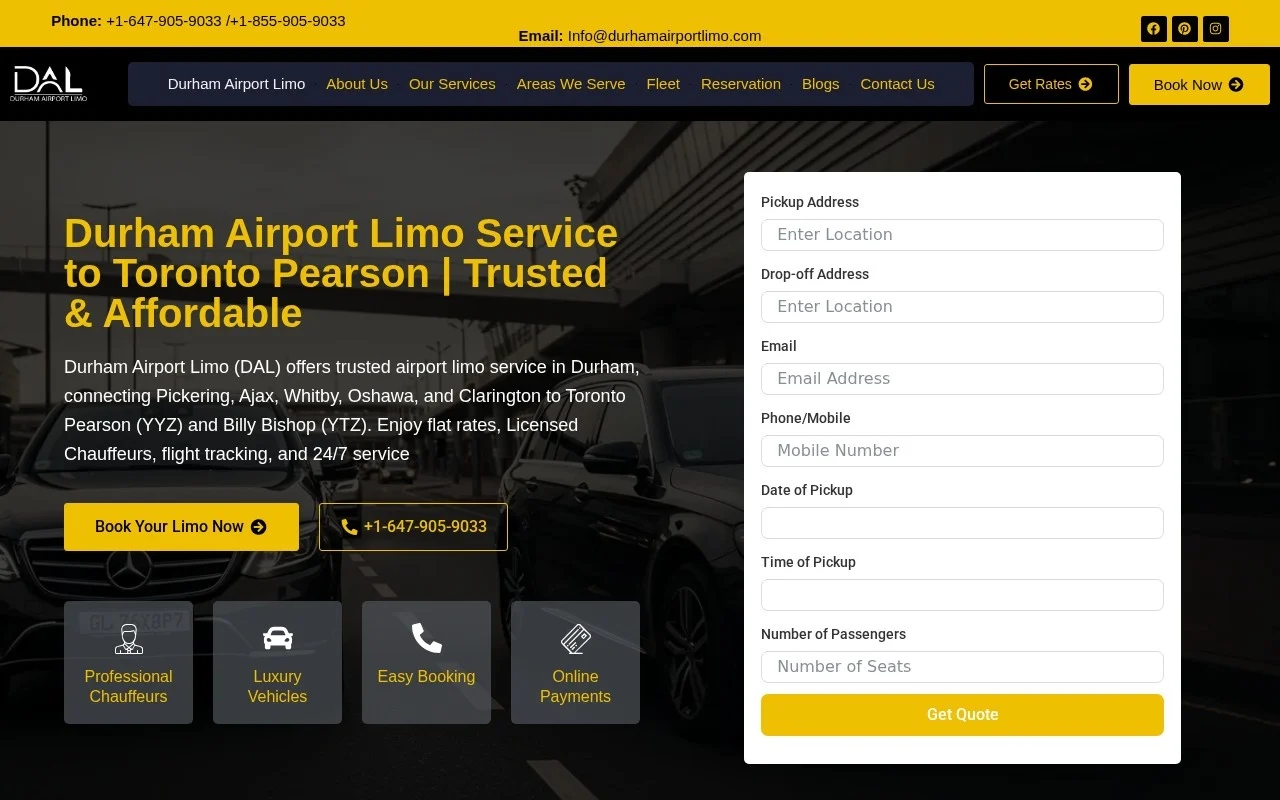
On a Durham Region airport-limo site we ran a 30-day Google Ads test. The result: CA$534.60 spent, 350 clicks, 0 tracked conversions.
That does not mean nobody booked. It means nothing recorded a booking, so nobody could say which keywords, ads or hours worked. With zero conversions, Google's automated bidding also had nothing to learn from.
What I changed in how I run ads after that test:
- Tracking goes in first. Quote-form submissions and calls must be recorded as conversions and tested with a real submission before the campaign starts.
- The landing page gets fixed first. The ad should land on a page that matches the search (airport, wedding, hourly) with a short quote form and a tap-to-call button visible on a phone without scrolling.
- Clicks are not a result. 350 clicks felt like activity. Without tracking it was only cost.
If your site has the problems in why limo websites lose bookings, fix those before turning ads on. Ads amplify whatever the site already does.
What does a small CA$15-a-day campaign look like?
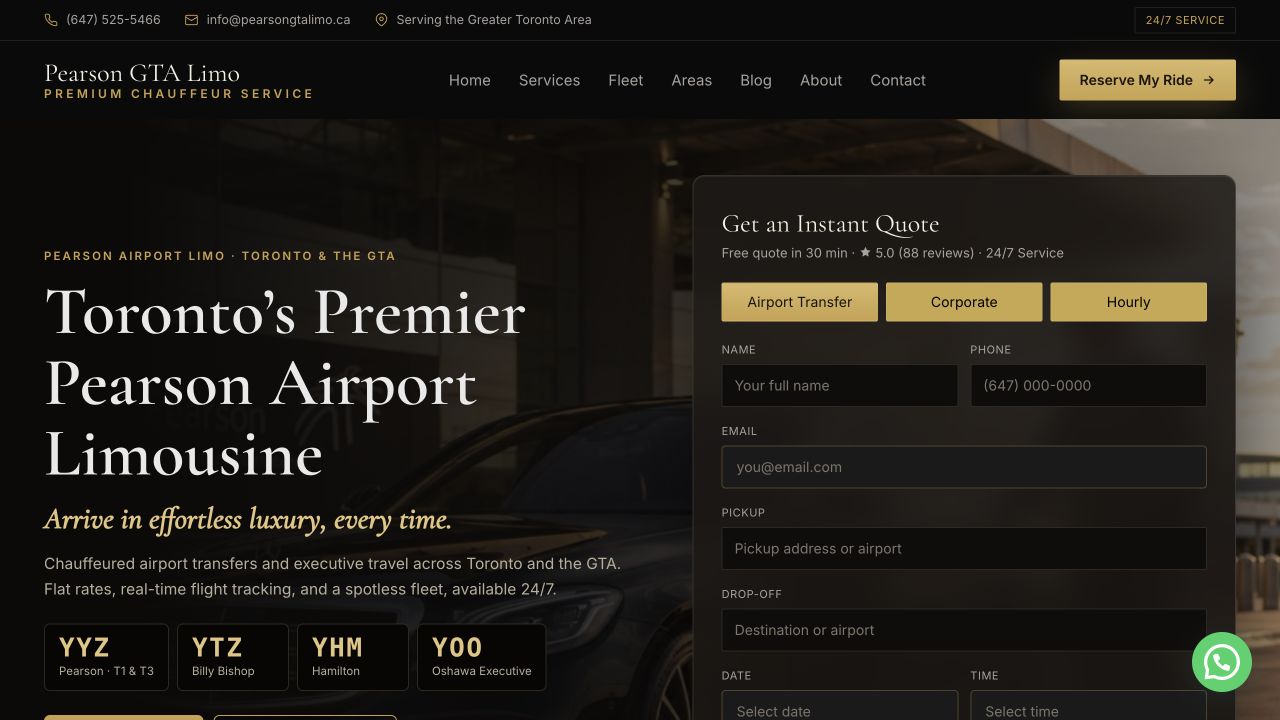
For a Toronto chauffeur site, Google Ads has been live since 6 August 2026 at CA$15 a day. A small fixed budget like this is a deliberate choice for an operator who wants to test search demand without a big monthly commitment.
What a budget this size can and cannot do:
- It caps the downside. Under Google's rules above, the monthly bill cannot pass CA$456.
- It buys a limited number of clicks. As an illustration only: at a CA$2.50 average click, CA$15 a day is about 6 clicks a day. You need tight keywords and tight geography so those few clicks are buyers.
- It needs time. With few clicks per day, a reliable read on cost per booking takes weeks, not days.
One honest separation: organic impressions for that site rose from 564 to 3,531 between the previous 90 days and the 90 days to 17 October 2026. That is organic search, a different channel from the paid ads, and I do not credit the ads with it.
What is the minimum setup before you spend a dollar?
Use this as a pass or fail list. If any line fails, fix it before launching.
- Form conversion tracking. A conversion fires when the quote or booking form is actually submitted (on the thank-you state), not when the page loads. Google's conversion tracking overview covers website actions and phone calls.
- Call tracking. Track calls from ads and calls to the number on your site. Google's website call tracking swaps in a Google forwarding number and lets you count only calls longer than a minimum length you set, so pocket dials do not count.
- A working test. Submit one real test quote and make one test call. Confirm both show up in Google Ads before launch.
- A matching landing page. One page per main intent: airport transfers, weddings, hourly or corporate. Quote form and phone button visible on a phone without scrolling.
- A short quote form. Pickup, drop-off, date, time, passengers, phone or email. Ask for the rest later.
- Service-area targeting. Target where you actually pick up, not the whole province or state.
- A starting negative keyword list. Google's negative keywords page explains match types. Negatives do not cover close variants automatically, so add plurals and synonyms yourself.
- A weekly search terms review. Google's search terms report shows the real searches that triggered your ads. Add irrelevant ones as negatives.
- A way to mark booked rides. A simple sheet or your reservation system, with the source of each booking recorded. Without it you can only calculate cost per lead.
Starter negative keywords for a limo company
| Group | Example negatives | Watch out |
|---|---|---|
| Jobs | jobs, hiring, careers, driver jobs, salary, chauffeur jobs | Safe for almost every operator |
| Self-drive rental | car rental, rent a car, self drive, u-haul | Do not add "rental" alone: "limo rental near me" is a buying search |
| Buying a vehicle | for sale, used limo, limo for sale, buy limousine | Safe |
| Starting a business | how to start, license, insurance, software, dispatch software | Safe for operators |
| Price shoppers | cheap, cheapest, free, prom cheap | Your call: block only if you do not want budget enquiries |
| Toys and media | toy, model, game, movie, rc | Check the search terms report first |
This list is a start, not a finished set. Your own search terms report will show what your market actually types.
How do you work out cost per booked ride?
The formula is simple. The hard part is honest inputs.
Cost per booked ride = ad spend ÷ booked rides from ads
Booked rides = clicks × enquiry rate × booking rate
Clicks = ad spend ÷ average cost per click
Here is a worked example. Every input is invented for illustration. None of it is client data or a benchmark.
| Input (example only) | Value | Result |
|---|---|---|
| Monthly ad spend | CA$1,000 | |
| Average cost per click | CA$2.50 | 400 clicks |
| Enquiry rate (click to quote or call) | 8% | 32 enquiries |
| Booking rate (enquiry to confirmed ride) | 30% | 9.6 booked rides |
| Cost per enquiry | CA$31.25 | |
| Cost per booked ride | about CA$104 |
Now the break-even check, again with example numbers. If an average booking is CA$220 and your margin after driver, fuel and vehicle costs is 35%, each ride leaves about CA$77 before marketing. At about CA$104 per booked ride, the campaign loses money on first rides. It only works if repeat customers or corporate accounts bring the number back.
The levers, in the order I would pull them:
- Booking rate: answer calls and quotes faster. Going from 30% to 40% in the example cuts cost per booked ride from about CA$104 to about CA$78 with no extra ad spend.
- Enquiry rate: a better landing page and shorter form.
- Cost per click: tighter keywords, negatives and better ad relevance.
To run your own numbers, use the estimate tool or see what is included in limo marketing.
Quick answers
How much does Google Ads cost for a limo company?
Google Ads for a limo company has no fixed price: you pay per click in an auction, usually less than your maximum bid. One real data point: a 30-day campaign for an airport-limo site in Durham Region, Ontario averaged about CA$1.53 a click (CA$534.60 for 350 clicks). Use Google's Keyword Planner to estimate click costs in your own market.
What is limo PPC?
Limo PPC is pay-per-click advertising for a limousine company, usually Google Ads search campaigns where you pay only when someone clicks. It is the fastest way to test passenger demand and the fastest way to waste money without conversion tracking. Track quote-form submissions and calls, and test both with a real submission, before the first dollar is spent.
What should a limo company budget for Google Ads?
Budget an amount you can afford to learn from, and plan on the monthly figure. Google can spend up to twice your daily budget on a busy day but bills no more than 30.4 times the daily budget in a month, so CA$15 a day caps the monthly bill at CA$456. A Toronto chauffeur operator has run Google Ads at CA$15 a day since 6 August 2026.
What is a good cost per booked ride?
A good cost per booked ride is any figure below the profit one ride leaves after driver, fuel and vehicle costs, plus the value of repeat bookings. We know of no verified industry benchmark. In this guide's invented example, about CA$104 per booked ride against about CA$77 of margin per ride loses money on first rides.
Apply this to your actual operation.
Use the relevant service scope and your operating market guide to prepare the next step. The booking calculator models your entered assumptions; a free meeting can address the real workflow.
Sources checked 20 October 2026: Google Ads actual CPC, Google Ads bid and budget, Google Ads Keyword Planner, Google Ads conversion tracking, Google Ads website call tracking, Google Ads negative keywords, Google Ads search terms report. Keyword CPCs from Grow Your Limo DataForSEO research (US, 27 September 2026). Campaign figures from Grow Your Limo client accounts and Google Search Console, pulled 20 October 2026.
Editorial guidance updated 20 October 2026. Examples are illustrative unless explicitly identified as a documented project result.