Who owns the customer on a broker ride?
A broker, an OTA or a lead reseller sends you a job. You run it well: clean car, chauffeur on time, flight tracked. The passenger is happy. Then they vanish, because they were never yours. Their name, email, phone and card sit on the platform, not in your book. The next time that passenger needs a car, they open the same app or call the same broker, and the ride is auctioned again. You did the work; the platform kept the customer.
That is the whole of the dependence problem in one sentence: a broker rents you access to a customer you are never allowed to keep. It is a fine way to fill a slow Tuesday. It is a dangerous way to build a business, because every month you start again from zero, on terms the platform sets. A direct booking is the opposite. The passenger found you, booked with you, and their details are yours to serve again.
Where does the money and the relationship go on a broker or OTA booking?
It helps to separate the mechanics, because operators usually only feel the first one.
The commission or markup. A broker either takes a cut of the fare or marks your rate up to the passenger and keeps the spread. Either way the platform is paid for owning the demand. You can argue the rate; you cannot argue the principle, because they hold the customer and you do not.
No relationship to reuse. On a brokered ride you often never get the passenger's real contact details, and the terms may forbid you from marketing to them. So you cannot email them a thank-you, cannot ask for a review on your own Google profile, and cannot offer them a corporate account. The one asset that compounds in this business, a kept customer, never forms.
Price-shopping by design. An OTA lists you on one screen beside your competitors. The passenger compares on price in ten seconds. That is good for the OTA and brutal for your margin, because the product in front of the buyer is "a black car", not "your company".
No repeat, no remarketing. Because you do not hold the contact or the pixel, you cannot bring that passenger back. Every ride is a first ride. Compare that with a direct customer you can remarket to, add to a loyalty list, or convert into a standing weekly airport run.
| What's at stake | Broker / OTA ride | Direct booking |
|---|---|---|
| Customer details | Held by the platform | Held by you |
| Margin | Cut by commission or markup | Your full rate |
| Who the next ride goes to | Re-auctioned by the platform | Comes back to you |
| Reviews | Build the platform's profile | Build your Google profile |
| Remarketing | Not possible | Yours to run |
None of this makes brokers evil. It makes them a tap you turn on for overflow, not the main inlet.
What does "owning your bookings" actually mean?
"Own your bookings" sounds like a slogan. In practice it is five concrete things working together, and missing any one of them leaks rides back to the platforms.
- A site that ranks for how people search in your city. Airport runs, weddings, proms, hourly, corporate: each is a page that earns a position in Google. That is the job of limo SEO and the website it lives on.
- A complete Google Business Profile. For local "limo near me" and map searches, the profile is often the first booking surface a passenger sees. Fill it, keep it current, and tie it to your site. We treat it as a core channel, which is why profile optimisation is a service in its own right.
- A direct booking path that completes on your own domain. If the "Book now" button throws the passenger to a vendor's page, you have handed the conversion away. The checkout, or at least the quote and lead capture, should finish on your site. One option we build is the Sarah assistant, a rule-based chat, voice and form widget with no LLM and no running cost, deployed on client sites. It is a widget, not a dispatch system, and it keeps the booking on your domain.
- Reviews you collect and own. Every direct ride is a chance to ask for a review on your profile. Automating that ask, through review automation, is how a direct operation out-ranks a broker listing over time.
- Remarketing to people you already touched. Site visitors and past passengers are the cheapest demand you will ever buy. You can only reach them if the tracking and the contact list are yours.
Those five sit under one roof. The ranked pages bring the visitor, the profile and widget convert them, reviews and remarketing bring them back. That is why we treat marketing and the reservation system as one job rather than two line items.
Is there enough direct demand to bother?
Operators who lean on brokers often assume the direct demand is not there. On the sites we work on, it is, and it is measurable. These are first-hand figures, not projections.
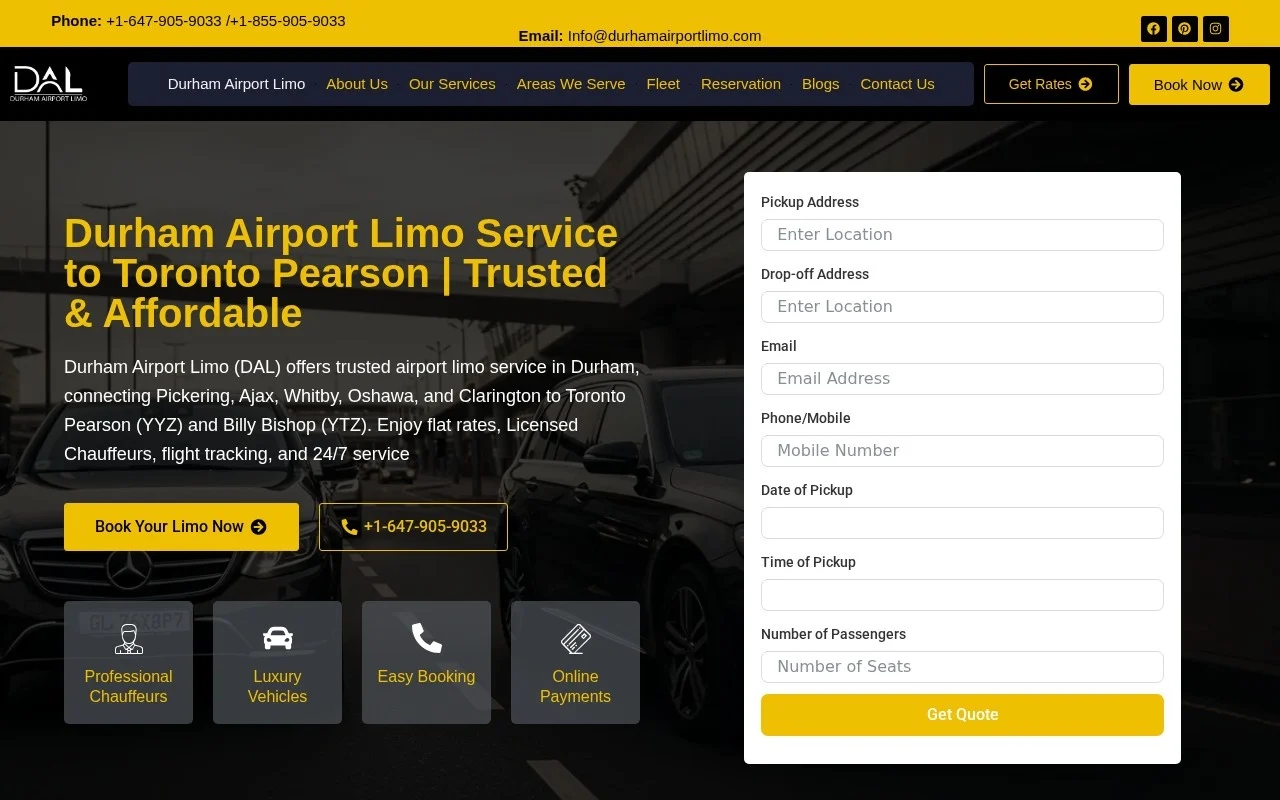
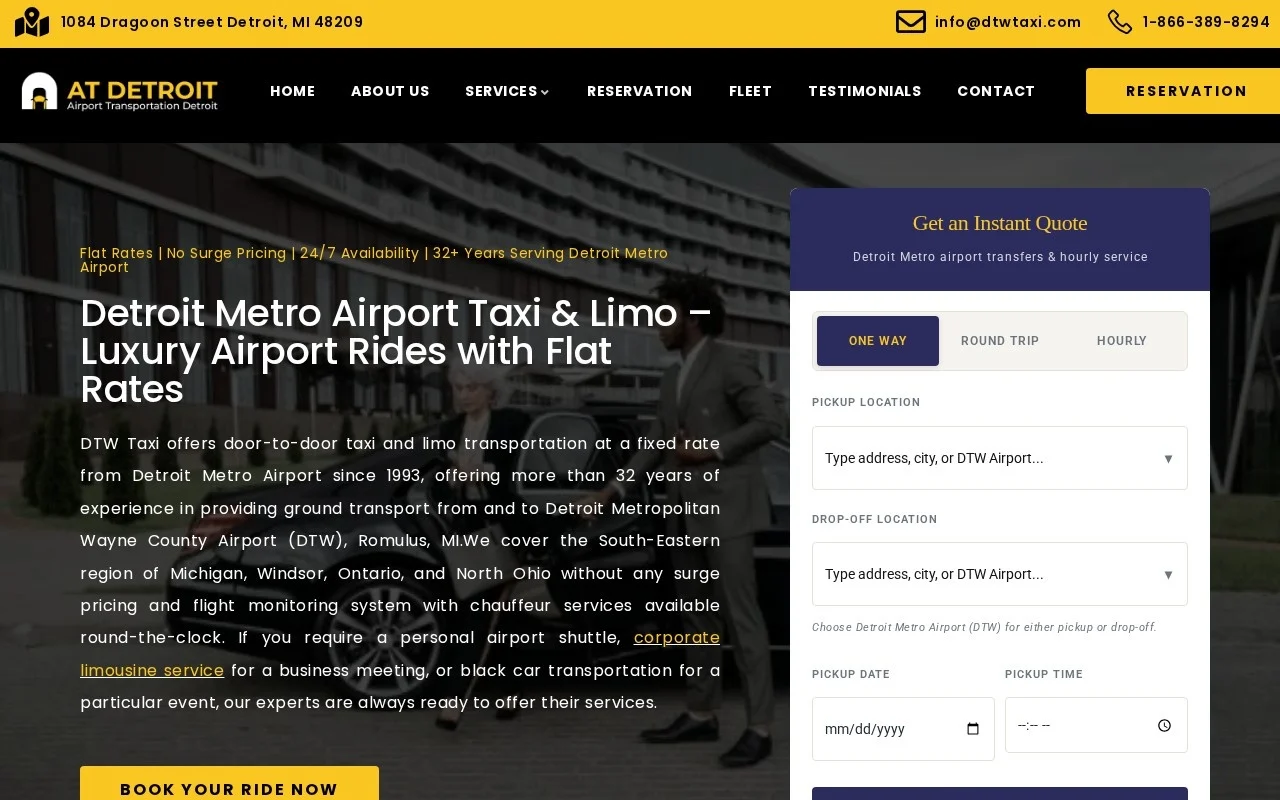
Over the 90 days to 17 October 2026, bestairportlimotoronto.com drew 1,188 organic clicks from 107,701 impressions in Google Search; across the full 16-month history that site has pulled 6,631 clicks from 695,294 impressions. dtwtaxi.com, a Detroit airport-taxi site, took 533 clicks in the last 90 days against 346 in the prior 90 days, a 54% rise, after its city pages were made unique. durhamairportlimo.com brought 262 clicks from 9,538 impressions in the same 90 days. Every one of those clicks is a passenger who found the operator directly, with no broker in the middle and no commission skimmed off the top.
Branded search tells the same story from another angle. Grow Your Limo's DataForSEO research (US, 27 September 2026) shows the term "limo business" at about 210 searches a month, and the software brand Limo Anywhere pulling roughly 29,060 US searches a month, of which about 14,800 are just "limo anywhere login". People type the name they already know. The lesson for an operator is simple: become the name customers remember in your city, and that search becomes yours instead of a platform's.
You do not need all of this at once. You need enough ranked pages and a complete profile to start capturing the searches that already happen every day in your service area. The portfolio shows what that looks like built out.
How do you shift from broker-dependent to direct without starving cash flow?
The mistake is to quit the brokers on Monday and hope direct rides appear by Friday. They will not. The shift is a season or two of overlap, roughly in this order.
- Keep the broker work running. It is paying for idle cars today. Do not cut the line that feeds the fleet before the replacement flows.
- Fix the foundation. Get the website ranking and loading fast, complete the Google Business Profile, and put a booking path that finishes on your domain in front of visitors. This is the slow part and the part that compounds.
- Harvest contacts and reviews from every ride. A card in the car, a follow-up message, a review request. Even where broker terms limit you, your direct and repeat passengers can be asked properly.
- Turn on remarketing once tracking is honest. Only when conversions record correctly (see the next section) should you spend on bringing visitors back.
- Let broker work become the overflow. As the direct share of bookings climbs quarter over quarter, you keep the brokers for genuine gaps, not as the core.
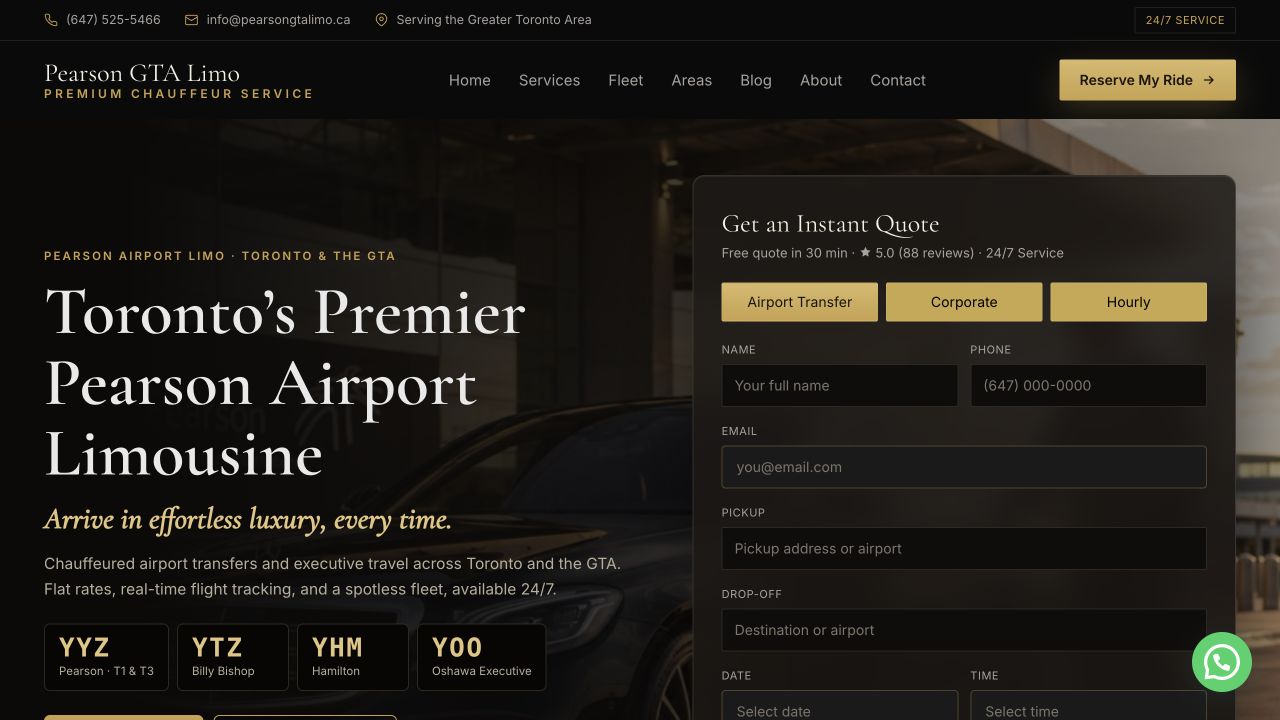
Rebuilding the site is the step operators fear most, because they worry about losing the rankings they have. It can be done cleanly. When we moved a Toronto Pearson chauffeur site to a new build in September 2026, all 641 previously ranking queries were preserved because every old URL was mapped and redirected first; server response time dropped from 0.9s to 0.27s and orphan pages fell from 16 to 2. A migration done carefully protects demand instead of spilling it.
What breaks when you try to track and convert direct bookings?
The most common failure is invisible: you start spending to win direct rides, and you cannot tell whether it worked. On a Durham Region airport-limo site we ran a 30-day Google Ads test that spent CA$534.60 and drew 350 clicks for 0 tracked conversions. The ads were not the problem. The tracking and the landing page were not ready before the spend started, so the bookings, if any, were never recorded.
That is exactly what happens when your booking path ends on a vendor's domain. The conversion fires on their page, not yours, so your analytics shows traffic leaving and nothing coming back. You end up unable to separate a profitable direct channel from a broker one, which is the whole point of going direct. Before you spend a dollar, confirm a conversion tag fires on your own confirmation step, and read our note on the real cost per booked ride and on why limo websites lose bookings at the checkout.
When do brokers and OTAs still make sense?
Plenty of times, and pretending otherwise would be dishonest. A broker ride beats a parked car. Use them deliberately for:
- Idle capacity. A slow midweek slot, a late cancellation, a car that would otherwise sit. Thin margin on a moving car still beats zero on a parked one.
- A market you have not ranked in yet. If you are expanding into a new airport or city, broker and affiliate work can carry you while your pages climb. Treat it as a bridge.
- Testing demand. Steady broker volume in an area is a signal that direct demand is there to be captured.
The real danger is comfort. A fleet that looks "full" on low-margin broker work can feel healthy while owning nothing: no customer list, no reviews, no remarketing, no brand. Keep the tap on for overflow, and keep building the direct channel underneath it so that one day the brokers are the backup, not the business. If you want a second pair of eyes on where your bookings actually come from, book a free call or start with the estimate tool.
Quick answers
What is a direct booking for a limo operator?
A direct booking is a ride a passenger makes through your own channels, your website, your phone or your Google Business Profile, where you hold the customer's details and pay no platform commission. It is the opposite of a brokered or OTA ride, where the platform owns the customer and takes a cut or marks up your rate.
Are brokers and OTAs bad for limo operators?
No. They are a useful way to fill idle capacity, bridge into a new market, and test demand. The risk is depending on them as your only pipeline, because you never build a customer list, reviews or remarketing of your own. Use them as overflow while you grow direct bookings underneath.
How long does it take to shift from broker work to direct bookings?
Plan for a season or two of overlap, not a clean switch. Ranking a site and building a Google Business Profile compounds slowly, so keep the broker work running for cash flow while the direct channel grows, then let brokers become the overflow as the direct share of bookings climbs.
What is the single biggest lever for more direct bookings?
There is no single lever; it is a ranked website, a complete Google Business Profile, a booking path that completes on your own domain, and reviews you collect, all working together. Missing any one of them leaks rides back to the platforms. Tracking that actually records conversions ties the whole thing together.
Sources checked 20 October 2026: Grow Your Limo Search Console data for client sites (90 days to 17 October 2026, and 16-month history); Grow Your Limo DataForSEO keyword research (US, 27 September 2026). Figures for brokers, OTAs and commissions are described as mechanics only; no platform's specific rate is quoted.
Written by Wali Shah, Grow Your Limo. Updated 20 October 2026.