Should you hire a limo specialist or a general marketing agency?
Most agencies that pitch a limo company are generalists. They run the same playbook for a dentist, a plumber and a chauffeur service, swapping the keywords. That playbook misses what makes ground transport different, and the gaps cost you bookings.
A limo business lives on three things a generalist rarely sees. First, airport demand runs on flight schedules, not office hours — a lot of your searches happen late at night and early in the morning, when a flight is landing or boarding. Second, your passengers search by airport code and route ("YYZ to downtown", "pickup from Terminal 1"), not by generic service words. Third, you operate under licensing that varies by jurisdiction — the CPUC in California, the PUC or local limousine commission in many US cities, TfL and private-hire rules in London. An agency that does not know these exist will write pages that read as filler to both Google and your customer.
A specialist is not automatically better than every generalist — a sharp generalist who will learn your trade can beat a lazy specialist. But the burden of proof sits with the generalist. Ask them to show limo, chauffeur or airport-transfer work they have done, not a logo wall of unrelated industries. If the only limo on their site is the one in your contract, you are paying them to learn on your budget.
What should a limo marketing agency actually know about your business?
Use this as a quick competence screen on the first call. A specialist answers these without blinking; a generalist pauses.
- Airport codes and routes. Can they build and rank pages for your real airports and routes using the three-letter IATA codes travellers type, not just "airport limo service near me"? Route and terminal pages are where airport bookings are won.
- The overnight search window. Do they understand that a chunk of your high-intent searches happen at hours a normal local business is closed, and that your Google Business Profile and site have to convert a stranded traveller at 2am?
- Structured data that fits transport. Can they tell you which Schema.org types actually validate for a car-service page, and which commonly-suggested ones do not behave the way people assume? If "LimousineService" comes up, a good agency knows the caveats — read our note on the LimousineService schema type before you take anyone's word for it.
- Reviews tied to real rides. The cleanest way to grow genuine reviews is to ask the passenger right after the trip. Do they connect your reservation system to a review request so it fires when a ride completes, not a random blast? That is the difference between review automation and buying stars.
- Licensing awareness. Do they know your jurisdiction's rules enough to avoid writing claims that get you in trouble, and to lean on the trust your licence gives you?
None of this is exotic. It is simply the vocabulary of the business you are in. An agency that speaks it will waste less of your money finding its feet.
What should you ask an agency before you sign?
Get the answers in writing, in plain language. Vague answers here become disputes later.
- "What will I own at the end?" You want to own the website, the domain, the Google Business Profile, the analytics accounts and your booking data. If the agency keeps the site on their platform and you leave empty-handed when the contract ends, you were renting, not building.
- "How will we measure success?" The honest answer is booked rides, calls and form leads — not rankings or impressions alone. Ask how they will attribute a booking to a channel. If they cannot, read cost per booked ride and bring it to the call.
- "Who does the work, and where?" Find out if writing and dev are in-house or subcontracted, and who your point of contact is.
- "What is the contract length and the exit?" Month-to-month or a short initial term with a clear offboarding is a sign of confidence. See the next section for why long lock-ins are a flag.
- "Can I see a report from a current client?" Redacted is fine. You are checking whether their reporting shows outcomes or just activity.
- "How do you handle reviews?" The only acceptable answer is that they help you earn real reviews from real passengers. Anything about "seeding", "boosting" or "we have a network" is your cue to leave.
- "What happens to my rankings if we rebuild the site?" A competent agency maps and redirects every old URL before launch so existing traffic survives. If they shrug, they will cost you the rankings you already have.
What are the red flags?
Some pitches sound great and should still end the meeting. Here are the ones we see most, and what an honest agency does instead.
| Red flag | Why it's a problem | Honest alternative |
|---|---|---|
| "We guarantee #1 on Google" | No agency controls Google's ranking. A guarantee is either a lie or a bet on a worthless keyword. | A forecast of realistic ranges, with the risk stated plainly. |
| Fake or incentivised reviews | It breaks platform rules, invites removal and penalties, and it is fraud on your customers. | Reviews requested from real passengers after a completed ride. |
| Long lock-in with no exit | 12-month-plus contracts with no offboarding trap you when results do not come. | Short term or month-to-month, with your assets handed back on exit. |
| No reporting, or vanity reporting | Impressions and "activity" hide whether the phone is ringing. | Monthly reports tied to calls, leads and booked rides. |
| Renting you leads | Leads sold to you (and often to your competitor) stop the day you stop paying. | Building your own ranking pages and bookings on your own domain. |
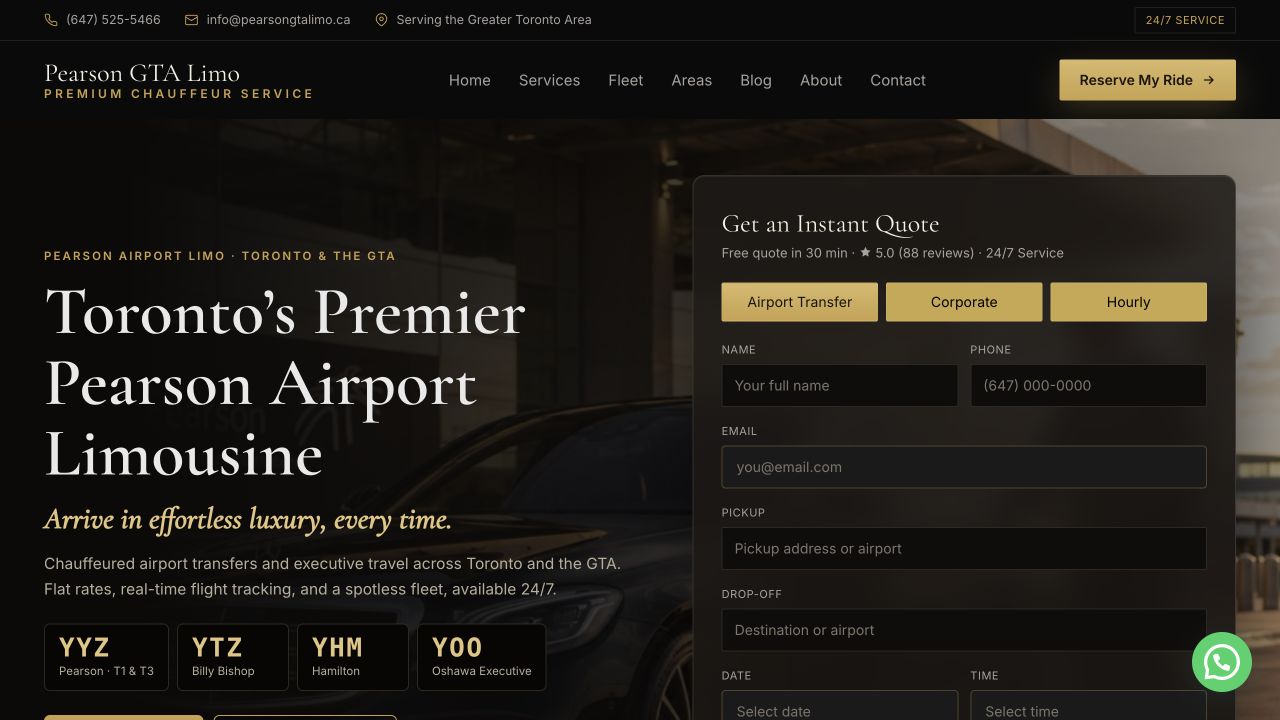
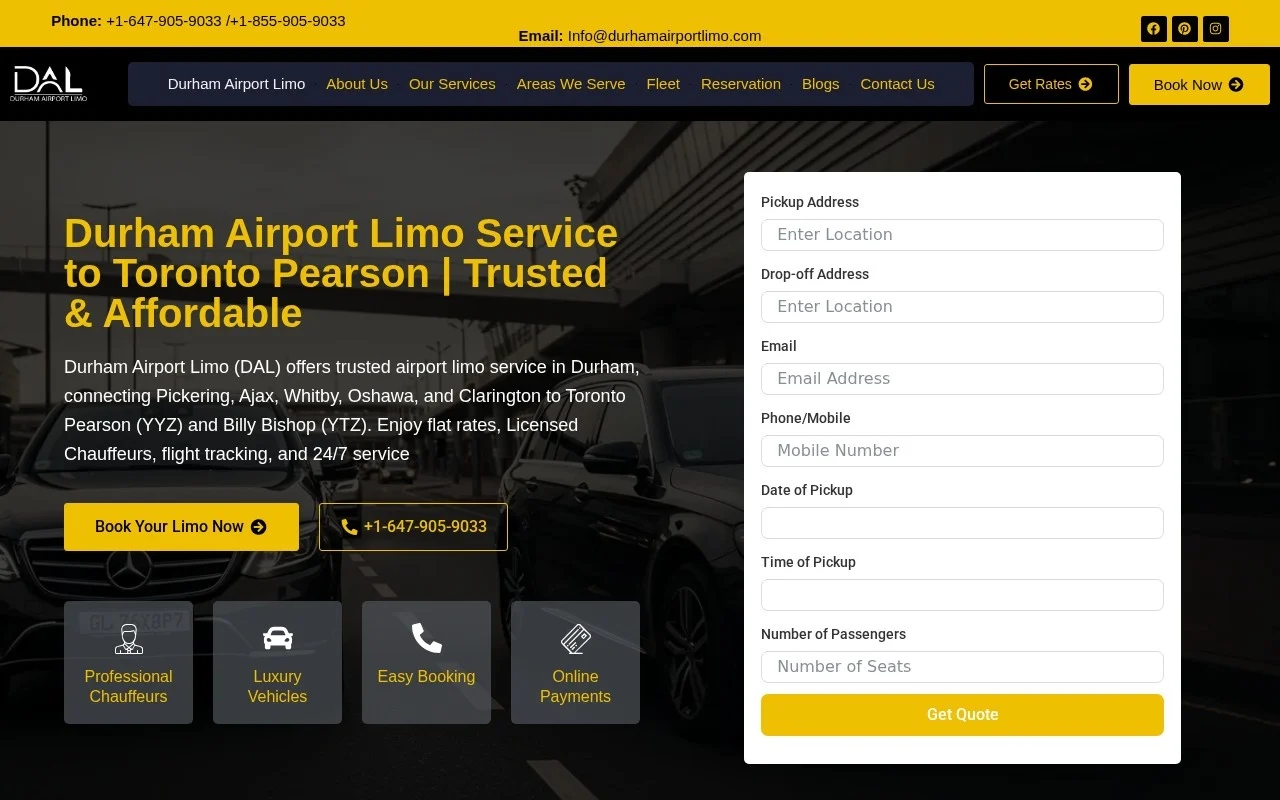
The fake-review flag is not hypothetical. On operator sites we were brought in to clean up, we have pulled fabricated trust signals that a previous provider had planted: on a Toronto airport-limo site, fabricated rating markup was sitting on roughly 165 pages; on a Durham Region airport-limo site, 256 fake rating widgets spread across 32 pages; on another Toronto airport site, 46 fake testimonial sections. In every case the owner did not know it was there until it became a liability. If an agency is willing to invent a rating for you, assume it will invent your results too.
The "renting leads" flag is the subtler one. A lead vendor keeps the asset — the ranking page, the ad account, the phone number — and bills you for the drips. The moment you stop paying, the pipeline stops. Owning the bookings is the opposite model: the pages, the site and the booking flow are yours. That is also why we treat the website and the booking tool as one job, and why a rule-based option like our Sarah booking assistant runs on your own site at no per-lead cost.
What does honest reporting look like?
Reporting is where you find out whether an agency is working for your bookings or for its own invoice. A good monthly report is short and answers three questions: what did we do, what did it produce, and what are we doing next.
"What it produced" should lead with outcomes you can feel — calls, form submissions and booked rides by channel — then the supporting SEO numbers (rankings for your money keywords, organic clicks, Google Business Profile calls and direction requests). If the only slide is a rankings screenshot, push back.
Honest reporting also means not reporting noise as a win. An automated audit will throw false alarms, and a disciplined agency checks before it acts. In a September 2026 scan across ten limo sites we work on, an automated check flagged seven of the ten for a "wrong phone number" — and every single flag turned out to be a false positive, caused by things like CSS values and form placeholders the scanner misread, not an actual bad number. An agency that reported those seven as problems you must pay to fix would be billing you for its own tooling's mistakes. The test is whether they verify a finding before it reaches your invoice.
One more thing a report should show: tracking that actually fires. Before you judge any channel, the conversion tag on your booking confirmation has to work. The next section has a cautionary tale about what happens when it does not.
How does limo marketing pricing usually work?
There is no single price, and you should be suspicious of anyone who quotes one off a rate card without looking at your market. Limo marketing is quoted custom, because the work scales with your city, your competition and how much of the site and booking flow needs rebuilding. A single-car operator in a quiet market and a thirty-car fleet fighting three incumbents at a major airport are not the same job.
What you can expect is a shape to the pricing, usually one of:
- Project fee for one-off work — a website rebuild, a schema and on-page cleanup, a migration.
- Monthly retainer for ongoing SEO, content and profile management, sized to how many pages and markets you are targeting.
- Ad management billed separately from your ad spend, so you can see what goes to Google and what goes to the agency.
Ask for the scope behind the number, not just the number. Our own write-up of limo SEO cost and scope walks through what sits inside a retainer so you can compare like for like. And whatever the shape, insist the ad spend is itemised away from the management fee. You should always be able to see exactly how much reached Google.
Be wary of two extremes. A price far below everyone else usually means leads rented from a shared pool, or work done once and left to rot. A price far above, with a guarantee attached, is paying for a promise no one can keep. The right quote is specific to your fleet and your market, and the agency can explain every line.
How do you check an agency has actually moved the needle?
Ask for evidence with numbers and dates attached, then read it the way you would read your own books. Here is the kind of first-hand result we can point to, so you know what honest proof looks like.
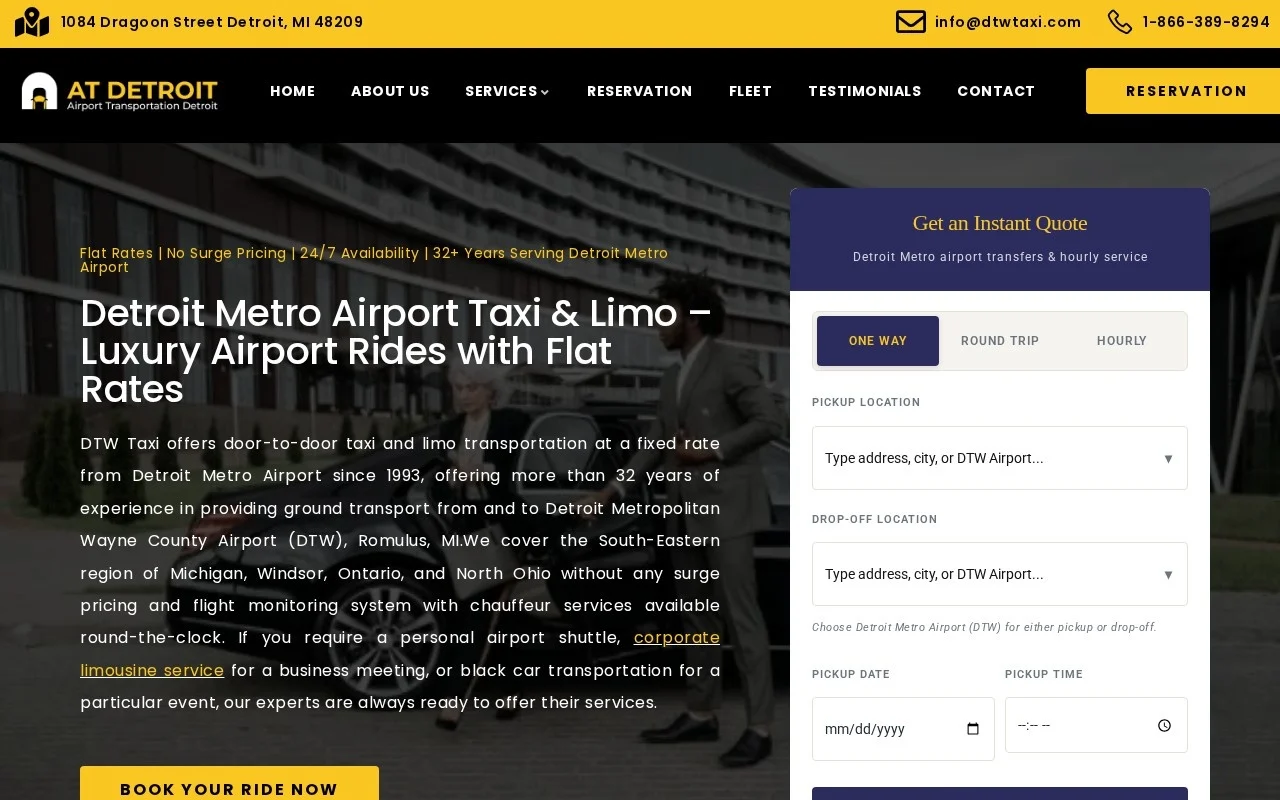
On a Detroit-airport taxi site, after an HTTPS fix, fresh 2026 rates for 262 cities and rewriting duplicate city pages so each one was genuinely different, Search Console recorded 533 clicks from 61,464 impressions in the 90 days to 17 October 2026, up from 346 clicks and 44,294 impressions in the prior 90 days — about a 54% rise in clicks. That is a specific site, a specific window, and work you can name.
Proof also includes the losses, because a trustworthy agency tells you about those too. On a Durham Region airport-limo site we ran a 30-day Google Ads test that spent CA$534.60 and drew 350 clicks for zero tracked conversions. The money was not wasted because the ads failed — it taught the lesson that tracking and the landing page have to be right before you spend, not after. Any agency that has never had a result like that has either not run enough campaigns or is not telling you everything.
And ask what happens to the traffic you already have when they rebuild. When we migrated a Toronto Pearson chauffeur site to a new build in September 2026, all 641 previously ranking queries were preserved, because every old URL was mapped and redirected before launch; on the same rebuild, server response time dropped from 0.9s to 0.27s and orphaned pages fell from 16 to 2. A migration that keeps your rankings is the clearest sign an agency knows what it is protecting.
You can see more of this kind of work in our portfolio. When you are ready to compare an agency against your own numbers, book a call or start with the estimate tool, and bring whatever Search Console or booking data you have.
Quick answers
Do I need a limo-specific agency, or will any SEO company do?
Either can work, but a generalist carries the burden of proof. A limo-specific agency already understands airport routes and IATA codes, the overnight search window, chauffeur licensing and ride-triggered reviews. A generalist has to learn that on your budget. If you hire a generalist, pick one who will show you a plan for those specifics, not a rate card built for dentists.
Is a #1-ranking guarantee ever legitimate?
No. No agency controls Google's rankings, so a guarantee is either dishonest or pinned to a keyword no one searches. A credible agency gives you a realistic forecast with the risks named, and measures success in booked rides, calls and leads rather than a single ranking position.
How much should limo marketing cost?
It is quoted custom, because the work scales with your market, your competition and how much of the site and booking flow needs building. Expect a project fee for one-off builds, a monthly retainer for ongoing SEO and content, and ad management billed separately from ad spend. Ask for the scope behind the number and make sure the spend is itemised away from the fee.
What is the single biggest red flag?
Any sign the agency fabricates trust — fake reviews, invented ratings or planted testimonials. We have removed exactly those signals from operator sites that previous providers built, including fabricated rating markup across roughly 165 pages on one airport-limo site. If an agency will invent a rating for you, assume it will invent your results too.
How do I know an agency actually produced results?
Ask for numbers with dates and a named site, and read them like your own books — including the campaigns that failed and what was learned. Also ask what happens to your existing rankings during a rebuild; the right answer is that every old URL is mapped and redirected first, the way we preserved all 641 ranking queries on a Pearson chauffeur migration in September 2026.
Sources checked 20 October 2026: Grow Your Limo Search Console data for the operator sites cited (90 days to 17 October 2026) and Grow Your Limo DataForSEO keyword research (US, 27 September 2026). Figures are first-hand from accounts Grow Your Limo manages; licensing bodies (CPUC, TfL) referenced as general industry context.
Written by Wali Shah, Grow Your Limo. Updated 20 October 2026.