What kind of limo business should you start?
"Limo business" covers four quite different companies. They have different customers, different vehicles and, often, different regulators. Pick one to start with. You can add the others later.
| Model | Typical vehicles | Who books | What to watch |
|---|---|---|---|
| Black car / executive sedan and SUV | Sedans, full-size SUVs | Corporate travel desks, executive assistants, frequent flyers | Punctuality and invoicing matter more than the car. Repeat accounts drive revenue. |
| Airport transfers | Sedans, SUVs, vans | Travellers, hotels, travel agents | Airport pickup rules and fees, flight tracking, early-morning shifts. |
| Stretch limo and events | Stretch sedans and SUVs | Weddings, proms, anniversaries | Seasonal demand. Weekends book out, weekdays sit idle. |
| Party bus and group transport | Sprinter-style vans, mini-buses, coaches | Bachelor parties, tours, corporate groups | Bigger vehicles often move you to a stricter regulator and much higher insurance limits. |
For a first vehicle, a sedan or SUV doing airport and corporate work is the simplest start. It falls in the lowest required insurance tier in the markets below. It also gives you work every weekday, not just Saturdays. Stretch and party-bus work can pay well per booking, but the vehicles cost more and sit idle more often.
One rule of thumb before you choose: seat count decides who regulates you. In Michigan, a vehicle with 8 or fewer seats (including the driver) is licensed by the state licensing department (LARA). At 9 or more seats, the Department of Transportation (MDOT) takes over. In Chicago, a livery vehicle can seat at most 9 people including the driver. In Ontario, a bus seating 10 or more passengers needs a provincial CVOR certificate. Federally, the insurance minimum jumps from $1.5 million to $5 million at 16 seats. A 14-seat van and a sedan are different businesses on paper.
What licences do you need before your first paid ride?
In the US and Canada, limo licensing is mostly local. Depending on the market, it is issued by a city, a state utility commission, a state transportation department or a provincial ministry. There is no single national limo licence. Our limo license guide covers New York City, California, Chicago, Michigan, federal (FMCSA), Ontario and the UK one by one, with the official links. Here is the short version.
The three layers most operators deal with
- The company or operator licence. Examples: a California CPUC charter-party carrier (TCP) permit, a New York City TLC base licence, a Michigan LARA limousine carrier registration, a Toronto limousine owner licence.
- A licence or permit for each vehicle. Examples: a TLC for-hire vehicle licence in NYC, a Chicago livery vehicle licence, a Mississauga Class A or B owner's licence.
- A licence for each driver. Examples: a TLC driver licence, a Chicago public chauffeur licence ($40 for up to two years), a Mississauga limousine driver's licence.
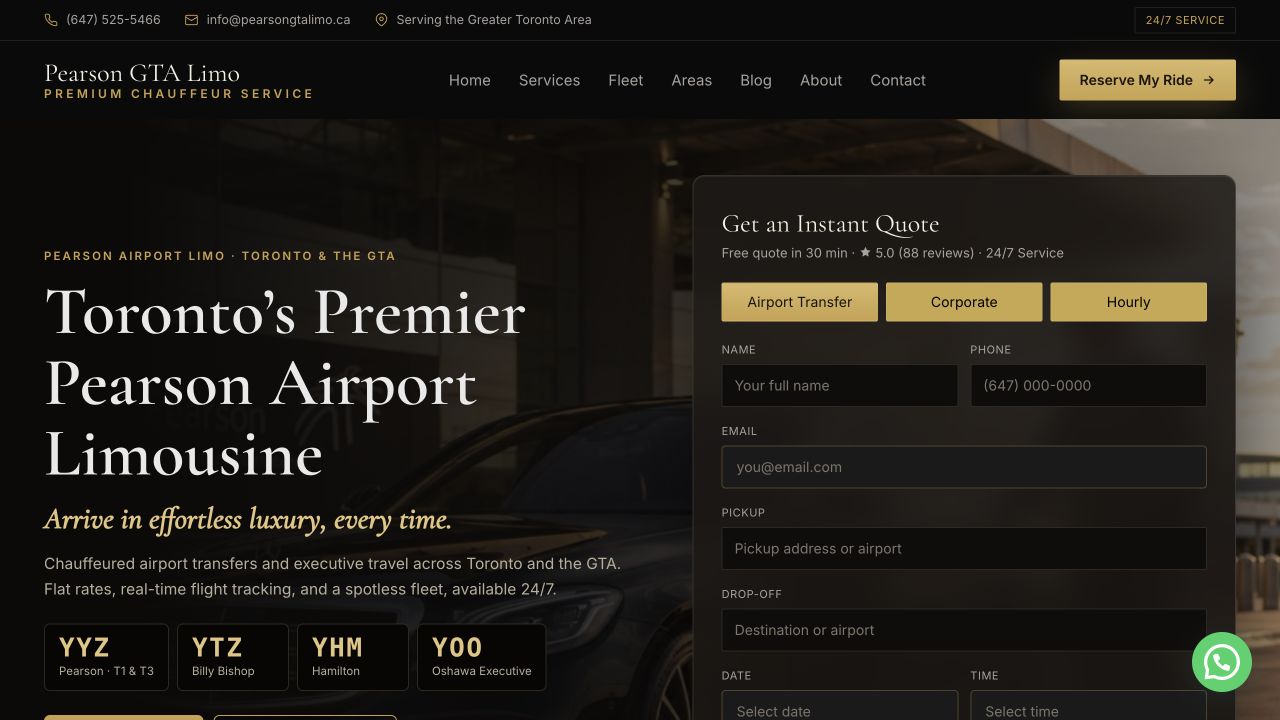
Then there are add-ons. Airports often run their own systems. At Toronto Pearson, every pre-arranged limo pickup must be registered online and carries a per-pickup fee ($17.25 for a sedan, van or SUV from 1 January 2026). If you will ever carry passengers across a state line in a vehicle designed for more than 8 people (including the driver), you need a USDOT number and FMCSA operating authority. That authority costs $300 to file.
If you are starting a limousine business in California
California is a common question, so here is the detail. The California Public Utilities Commission (CPUC) licenses limo companies as charter-party carriers. The application fee is $1,000 for most permit types and $1,500 for an "A" certificate. It is non-refundable. You will also need:
- Liability insurance on file with the CPUC at General Order 115-G levels: $750,000 for vehicles seating 8 or fewer (including the driver), $1,500,000 for 9 to 15, and $5,000,000 for 16 or more.
- Workers' compensation on file if you have employees.
- Enrolment in a drug and alcohol testing programme.
- A DMV Employer Pull Notice account. The CPUC says the contract takes about six weeks to arrive, so start this first.
- A CHP inspection for buses and modified limousines.
The CPUC also tells applicants to hold off unless they can start operating, and paying for insurance, within two to three months. Running for-hire trips before your authority is granted is unlawful.
New York City is a special case
If your plan is to launch in NYC, read the TLC rules before you buy anything. As of today, the TLC only accepts new for-hire vehicle licence applications for wheelchair-accessible vehicles. Every vehicle must also be affiliated with a licensed base. A new driver's TLC licence alone runs about $745 to $875 in listed fees (application, drug test, fingerprints, courses and exam), before any retakes.
What insurance does a limo company need, and why does it cost so much?
Insurance is usually the fixed cost that catches new owners off guard. You pay the premium whether the car runs ten trips a week or none. Regulators also set high minimum limits, because you carry paying passengers. Here are the policy types most operators end up with:
- Commercial auto liability. This is the policy regulators check. Personal auto policies do not cover for-hire work.
- Physical damage (collision and comprehensive) on vehicles you own or lease. Your lender or leasing company will usually require it.
- Workers' compensation once you have employee drivers or staff. California requires it on file with the CPUC if you have employees. Chicago requires it to comply with Illinois law.
- Commercial general liability. Toronto asks for $2,000,000 of commercial general liability for a limousine owner licence. Mississauga requires a minimum of $2 million, endorsed to the City.
The regulatory minimums for vehicle liability, from the official pages:
| Market | Smaller vehicles | Mid-size | 16+ seats |
|---|---|---|---|
| California (CPUC GO 115-G) | $750,000 (8 or fewer seats) | $1,500,000 (9–15) | $5,000,000 |
| US interstate (FMCSA) | $1,500,000 (15 or fewer, including driver) | $5,000,000 | |
| Michigan, MDOT-regulated buses | n/a (8 or fewer seats go to LARA) | $1,500,000 (9–15) | $5,000,000 |
| NYC TLC, luxury limousine | $500,000 per person / $1M per occurrence (1–7) | $1.5M CSL (8–15) | $5M CSL (16–20) |
| Chicago livery | $350,000 CSL (up to 9 seats) | n/a | n/a |
I am not going to quote premium ranges. Premiums depend on your driving records, vehicles, garaging address, claims history and the insurer. Any number I gave you would be a guess. What I can tell you is what to do about it:
- Get quotes before you buy vehicles. Three quotes from brokers who write for-hire passenger business, for the exact vehicles you plan to buy.
- Have a vehicle lined up when you apply. The CPUC notes that TCP insurance costs significantly more without a vehicle, and less once you can show the vehicle's commercial registration.
- Price the seat count, not just the car. Going from a 14-seat van to a 20-seat mini-bus can move you from a $1.5 million to a $5 million minimum.
- Put the premium in your per-hour rate. Divide your yearly insurance by the hours you realistically expect to bill. Check that your hourly rate covers it before you quote anyone.
Should you buy or lease your first limo, and are there age limits?
Buy if you have cash and plan to keep the car past the loan term. Lease if you want a low upfront cost and a predictable payment, and you can live with mileage caps. High-mileage airport work can blow through a lease allowance fast. Before you choose, check what the regulator allows. Some markets limit vehicle age and history:
- Toronto: vehicles registered as limousines by 31 December 2024 may be up to ten model years old until 31 December 2028. Zero-emission vehicles are exempt from the age limit. Vehicles branded as rebuilt are not allowed. Stretch limousines need an Annual Inspection Certificate, not a regular Safety Standards Certificate.
- Chicago: no salvage, rebuilt, junk or total-loss titles. Used vehicles need a vehicle history report.
- Michigan: MDOT counts seats at 14 inches per seating position. If a van physically seats 9 including the driver, it is regulated as a bus even if you only let 8 people ride. To license it under the smaller-vehicle law, the seating must be physically reduced.
- New York City: new for-hire vehicle licences are currently limited to wheelchair-accessible vehicles.
A practical tip: buy the vehicle your customers search for. Owners often want a stretch because it looks like "a limo". But in most markets, corporate and airport clients book black SUVs and sedans all year. Look at what is booked in your area before you spend.
What booking and dispatch software do you need?
With one car, a phone, a calendar and a payment link can work for a few weeks. Past two vehicles or one employee driver, you need proper reservation and dispatch software. That means online booking, quotes, driver assignment, flight tracking, invoices for corporate accounts, and farm-out to affiliates.
Owners search for this constantly. In Grow Your Limo's own keyword research (DataForSEO, US, 27 September 2026), "limo software" and "limousine software" showed about 140 searches a month at a $25.45 cost per click. "Limo dispatch software" showed about 90 a month at $32.72. Those CPCs tell you vendors compete hard for new operators. Compare on features and contract terms, not ads.
Start with our limo dispatch software comparison. If you are weighing the big names, read the Limo Anywhere review, Moovs vs Limo Anywhere, Limova review and Limo Anywhere alternatives.
Whatever you pick, make sure the booking form works on your own website, on a phone, without sending people to a clunky third-party page. A booking that has to jump to another site is a booking you can lose. We cover it in why limo websites lose bookings and in our reservation system integration work. For after-hours enquiries, I built a rule-based booking assistant called Sarah (chat, voice and form, no LLM, $0 running cost) that runs on client sites. The limits of AI assistants for limo companies are worth reading before you buy any chatbot.
How do you get your first limo customers?
1. Set up your Google Business Profile properly
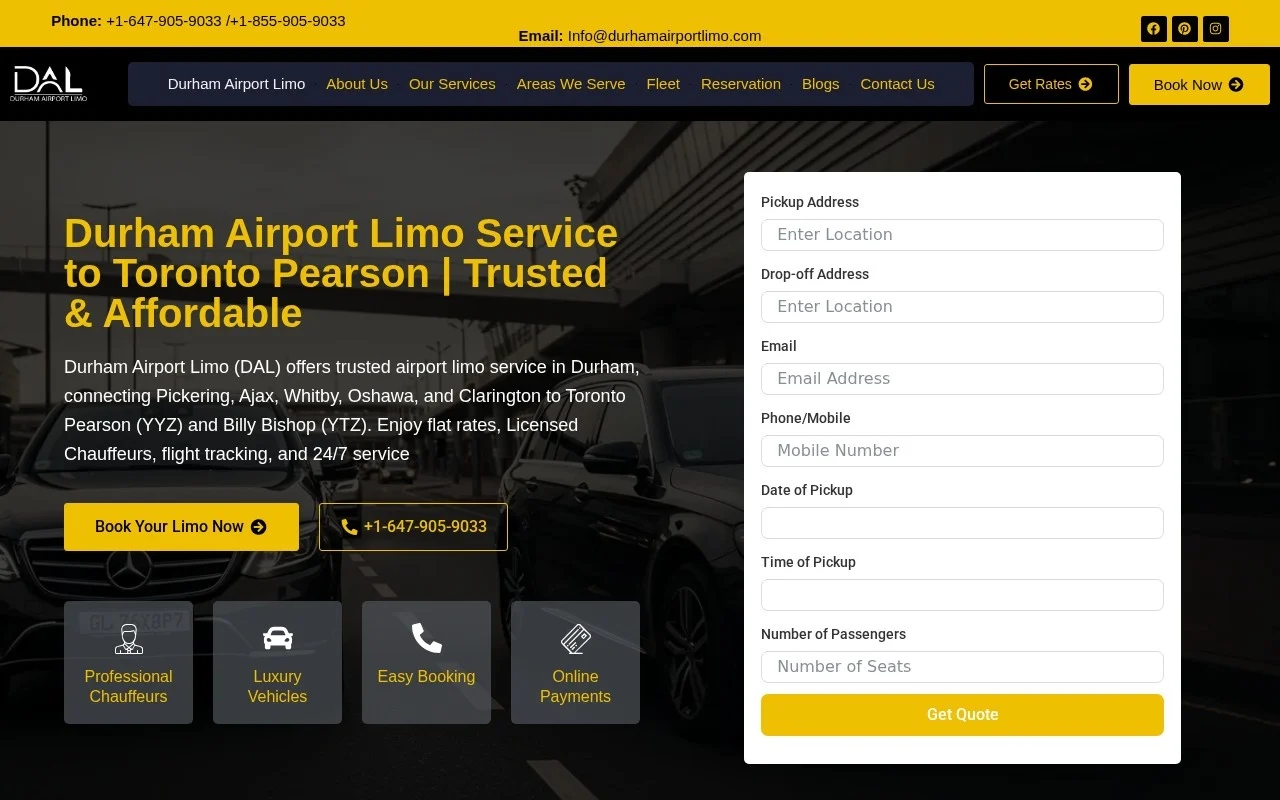
Most limo companies don't serve customers at their office, so Google treats them as service-area businesses. Google's own guidance: remove your address from the profile if customers don't come to you. List up to 20 service areas by city or postal code. Keep the overall area to about two hours' driving from your base. A radius is not allowed. Then add real photos of your real vehicles. Ask every customer for a review; Google does not allow asking only the happy ones. Never buy or invent reviews. On the sites I have cleaned up, we removed 256 fake rating widgets across 32 pages on a Durham Region airport-limo site, and 46 fake testimonial sections on a GTA airport-transfer site. Fake proof is a liability, not a shortcut. Our Google Business Profile optimization and review automation pages explain how we approach it.
2. Build a website that answers real questions
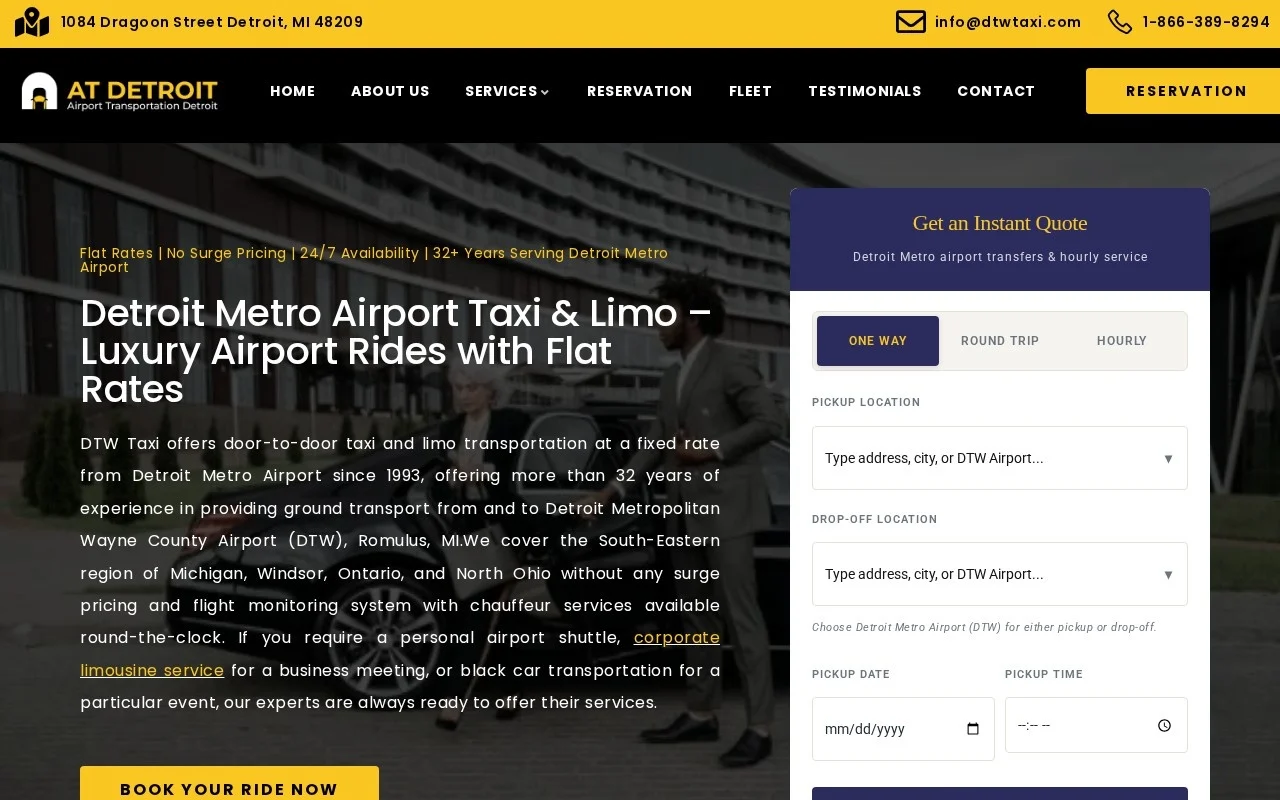
You need a fast site with one page per real service and area: rates or how pricing works, a fleet with real photos, and a booking form that works on a phone. On a Detroit airport taxi site (a Detroit airport taxi site), we published 2026 rates for 262 cities and made the city pages actually unique. Duplicate overlap fell from 27–29% to 7–23%. Clicks from Google went from 346 to 533 in the latest 90 days (20 July to 17 October 2026) compared with the 90 days before, a 54% increase. That is organic growth from useful pages, not tricks. See limo website design and limo SEO.
3. Sign corporate accounts
One office manager who books airport runs every week is worth more than a dozen one-off prom bookings. Build a simple one-page account offer: monthly invoicing, a dedicated contact, flight tracking, and a stated wait-time policy. Take it to the companies near your base.
4. Get to know hotel concierges and event planners
Concierges and wedding planners are asked for car recommendations every week. Visit in person, leave a rate card, and follow up after every job they send you.
5. Join affiliate and farm-out networks
Farm-out is when one operator passes a job to another because they lack a car or coverage in that city. For a new company with one or two cars, it can fill gaps in both directions. Be the operator other companies trust with their clients: on time, clean car, clear invoice.
6. Be careful with paid ads at the start
Google Ads can work, but not before your tracking and landing page are ready. On a Durham Region airport-limo site, a 30-day test spent CA$534.60 for 350 clicks and recorded 0 tracked conversions. The lesson was not "ads don't work". It was "set up call and form tracking, and a page built for the search, before you spend." Our breakdown of Google Ads cost per booked ride goes deeper.
What does a realistic first 90 days look like?
Days 1–30: paperwork and numbers
- Choose your service model and your first one or two vehicle types.
- Identify every regulator for your city, vehicle size and airports. Use the limo license guide as a starting point, then call each office.
- Form your company (LLC, corporation or provincial registration) and open a business bank account.
- Get insurance quotes for the exact vehicles you plan to run.
- Start the slow items first: the DMV Employer Pull Notice in California (about six weeks), drug-testing enrolment, and criminal record checks where required.
- Build a rate sheet that covers insurance, vehicle payment, fuel, driver pay, and airport and parking fees. It is the core of your limo business plan.
Days 31–60: vehicle, licences, systems
- Buy or lease the vehicle, register it commercially and book any required inspection.
- File your operator, vehicle and driver applications.
- Set up booking and dispatch software, payment processing and invoice templates.
- Launch a simple website with real photos and a working mobile booking form.
- Create your Google Business Profile, set your service areas and verify it.
Days 61–90: first revenue
- Once your authority is granted, and not before, take your first paid trips.
- Visit 20 local businesses and 10 hotels with a one-page account offer.
- Contact three established operators about farm-out work in both directions.
- Ask every completed customer for a Google review.
- Review the numbers weekly: bookings, cost per hour, and where each booking came from.
How much does it cost to start a limo business?
Honestly, it depends on your market and vehicle more than anything else. I won't invent a total. Here are fixed government fees I verified today, so you can see how much they vary:
| Item | Official fee |
|---|---|
| Michigan LARA limousine carrier, 1 vehicle (first year) | $125 ($25 application + $100 licence), then $100 a year |
| California CPUC TCP application (most types) | $1,000 non-refundable ($1,500 for an "A" certificate) |
| FMCSA interstate operating authority | $300 per authority type |
| Toronto limousine owner licence, new (2026) | $1,471.59, then $574.93 to renew |
| Mississauga limousine owner licence, new | $543.34, plus $218.91 per new driver licence |
| Chicago livery vehicle licence | $1,200 for two years, plus $3.50 per taxable day ground transportation tax |
| NYC TLC driver licence (all listed fees) | About $745–$875 |
The big numbers are the vehicle and the insurance. Get real quotes for both before you commit. Then budget for at least a few months of insurance and vehicle payments before bookings cover them. If you want help planning the marketing side, the planner below estimates what a booking channel is worth. Or book a call and we can go through your market.
Rules and fees change. Treat every figure here as a starting point and confirm it with the regulator before you apply.
Quick answers
Is a limo business profitable?
A limo business can be profitable, but no honest guide can give you a margin without your own numbers. Profit comes down to how many paid hours each vehicle runs, your hourly or trip rate, and the fixed costs that never stop: insurance, licences, vehicle payments and software. Insurance alone is large; FMCSA's interstate minimum for smaller vehicles is $1,500,000.
How much does it cost to start a limo business?
The cost to start a limo business depends on your city, vehicle and insurance quote, so we do not publish a total. The government fees are knowable: a California CPUC permit is $1,000 or $1,500, FMCSA operating authority is $300 per authority type, a new Toronto limousine owner licence is $1,471.59, and Michigan LARA registration for one vehicle is $125.
How do you start a limo business in Texas?
Start a Texas limo business by checking your city's vehicle-for-hire rules and the federal registration rules. FMCSA lists Texas among the states that require a USDOT number even for intrastate carriers. We could not load Houston's permit pages on 20 October 2026, so confirm city permits directly. Our limo license guide covers the markets we could verify.
What should a limo business plan include?
A limo business plan should answer four questions before you buy a car: which service model you will sell, which regulator licenses that vehicle size in your city, what insurance costs for that exact vehicle, and where your first bookings will come from. Add a rate sheet that covers insurance, vehicle payments, fuel, driver pay and airport fees.
How do you advertise a new limo business?
Advertise a new limo business where riders already decide: a verified Google Business Profile, a fast website with a working quote form, hotel and corporate contacts, and farm-out networks. Hold paid ads until tracking works. A 30-day Google Ads test on a Durham Region airport-limo site spent CA$534.60 on 350 clicks with 0 tracked conversions. See limo marketing.
Sources checked 20 October 2026: CPUC charter-party carrier licensing requirements, CPUC General Order 115-G, NYC TLC for-hire vehicle licence, NYC TLC driver licence, MDOT bus and limousine, MDOT bus and limousine FAQs, LARA transportation company licensing, Chicago BACP livery vehicle licences, Chicago public chauffeur licences, FMCSA: Do I need a USDOT number?, FMCSA operating authority, FMCSA passenger carrier insurance, City of Toronto limousine owner licence, City of Mississauga limousines, Toronto Pearson pre-arranged taxi and limo fees, Ontario CVOR, Google Business Profile service areas. Grow Your Limo figures come from Search Console (90 days to 17 October 2026, pulled 20 October 2026), project records, and DataForSEO research dated 27 September 2026.
Written by Wali Shah, Grow Your Limo. Updated 20 October 2026.