





Limo SEO cost and scope ↗
What moves the price of limo SEO: technical debt, the number of distinct passenger tasks, fact-checking effort and the pages you already have.
Limo SEO is the work that gets a limousine company’s own website found in Google’s organic results for the rides it sells. It covers technical fixes so pages get crawled and indexed, one strong page per service, airport and vehicle type, accurate content, internal links, and monthly reporting on searches, clicks and enquiries.

For operators with an existing website who need a coherent search foundation rather than more interchangeable city pages. We need website access, Search Console access where available, accurate operating coverage and someone who can approve passenger information.
These are work areas to scope after reviewing your business. The proposal defines deliverables, access, responsibilities and exclusions.
Limo SEO improves the technical accessibility, service content and internal navigation of a limousine operator’s website so relevant passengers can find and evaluate it in organic search. Our scope starts with your real fleet, routes and booking process. Google Business Profile work and paid campaigns are separate channels; a new city page is justified only when it answers a distinct customer need.
Review crawl access, canonicals, sitemap membership and mobile rendering. Distinguish eligible pages from pages Google has actually indexed.
Map airport, wedding, corporate and fleet intent to a useful owner page. Consolidate overlapping pages where the passenger task is the same.
Use operator-approved fleet limits, pickup policies and route coverage. Verify changing airport instructions against the airport’s own guidance.
Report query/page impressions and clicks, then reconcile qualified enquiries separately. An increase in visits is not evidence of an increase in booked rides.
Establish the query/page and enquiry baseline; resolve actual blockers; improve priority service pages; then review indexing and lead quality. Crawling and indexing remain Google’s decisions.
You approve business facts and supply authorised access. We document the implemented work and verification. Unsupported vendor actions, advertising spend and future search outcomes are not silently included.
The first quarter is about fixing what blocks Google and passengers, then rebuilding the pages that sell your real rides. Each step ends with something you can open and check.
Nobody controls when Google crawls, indexes or ranks a page. What we control is the work, the verification and the honesty of the report. So the plan below lists outputs, not positions.
Export the full Search Console history by query and page. Record current enquiries from forms, calls and your reservation system. Audit crawl access, canonicals, sitemaps, redirects, mobile rendering and loading speed. Build a fact sheet with you: fleet and approved passenger limits, airports served, service area, pickup rules. Remove any fabricated rating or review markup. You receive a ranked fix list with the reason for each item.
Rewrite or consolidate the service, airport and fleet pages that already earn impressions or carry your highest-value rides. Rewrite titles and meta descriptions. Cut repeated city text. Add internal links from the pages Google already trusts. Check that the quote form and call button work on a phone and that enquiries are counted.
Inspect each changed URL in Search Console and log Google’s reported state. Ship the second batch of pages. Compare like-for-like periods for impressions, clicks and enquiries. You receive a written report of what shipped, what Google reported and the backlog for the next quarter.
Ongoing SEO management is the same organic-search work carried on month after month: a maintained backlog, page updates, technical checks after every site change, and a report you can read in five minutes. It is not a different technique.
It suits an operator who already has a working site and wants someone to review changes, keep content accurate and pick the next useful improvement. It needs an agreed scope and one person on your side who can approve facts.
What belongs in the next month? Whatever costs you rides first. A changed airport pickup policy beats another near-identical suburb page. A broken booking link beats a cosmetic title rewrite.
What counts as completed work? A deployed change, a checked page and a record of the check. A recommendation sitting in a report is not a fix.
Do monthly fees guarantee new rankings? No. Fees pay for agreed work and review. Rankings, index coverage and AI mentions are outcomes we observe and report.
What is outside the retainer? Full rebuilds, advertising spend and custom software integrations are scoped separately. Retainer size depends on the size of the site, the approved backlog, the review cadence and the access you can give.
Rank actions by passenger usefulness, commercial intent and what Search Console actually shows. No fixed page quota.
Check indexing, redirects and internal links after any fleet, service or website change.
Review coverage, enquiry instructions and seasonal information with you. Change the content before changing a review date.
Compare like periods, list the work shipped and keep traffic, enquiries and completed bookings in separate columns.
These are Search Console figures pulled on 20 October 2026 for sites Wali Shah works on. “Last 90 days” means 20 July to 17 October 2026; “previous 90 days” is the 90 days before that.
An airport SEO example. Start with a search a passenger might make, such as “Toronto Pearson airport limo pickup.” The airport page should explain where the passenger meets the driver, how flight changes are handled and what information the office needs for a quote. In Search Console, track the query and the page together. In the booking records, check whether enquiries from that page were qualified and whether they turned into completed rides. See the Toronto airport limo project for the booking workflow. The search phrase here is an example.
Each site has its own market, history and competition, so none of these numbers is a forecast for yours. They show the kind of work involved and how we report it. More detail is on the portfolio.
Owners often buy one expecting the results of another. They show up in different places, cost money in different ways and stop working for different reasons.
A real example of the Ads lesson: a 30-day Google Ads test for a Durham Region airport-limo site spent CA$534.60 for 350 clicks and recorded zero tracked conversions. The clicks were real; the tracking and landing page were not ready. Fix those first. See Google Ads cost per booked ride and our Business Profile service.
Sometimes. Limo search demand is local and small. A three-car operator is not fighting for thousands of searches; it is trying to own a few dozen specific ones in one metro.
Passenger searches split across airport transfers, weddings, proms, corporate accounts and hourly hire, and each split is small. That is good news and bad news. Good, because a handful of strong, accurate pages can cover what your market searches. Bad, because there is a ceiling: SEO cannot create demand your area does not have.
What to expect. Search Console usually shows impressions growing before clicks. For example, a Toronto chauffeur site showed 3,531 organic impressions in the last 90 days against 564 in the previous 90. Clicks and enquiries follow if the pages answer the booking question and the quote path works on a phone.
When to wait. If you cannot take more bookings, if your site has no working quote or booking path, or if your Business Profile is not verified, fix those first. They are cheaper and faster.
How to decide. Put your own average booking value and close rate into the booking planner and see how many extra rides a month would pay for the work. Our limo SEO cost and scope guide explains what moves the price.
Open a scenario.
A route page deserves its own URL when it explains a real journey, pickup process, fleet suitability and quote requirements. If the only difference is the city name, improve an existing service page instead.
Clear public answers and original evidence can support discovery. Google says its usual SEO foundations apply to AI Overviews and AI Mode; there is no special AI schema or guaranteed citation.
What affects limo SEO cost?. Build useful airport transfer pages.
Scope depends on technical debt, the number of distinct passenger tasks, factual review effort and the existing content inventory. Agree the audit and implementation backlog before committing to a page quota.
Use the booking calculator to explore your own assumptions. It does not measure current market competition, forecast search positions or establish a return on investment.
A limo company should target the rides it actually sells, named the way passengers search: airport transfers with the airport name, weddings, proms, corporate accounts, hourly hire and vehicle types, combined with the city or region it serves. These limousine keywords have small, local volumes, so one strong page per real service beats dozens of thin city pages. Use the guide to map limo keywords to the right intent.
Limo SEO has no fixed timeline, because Google decides when it crawls, indexes and ranks pages. Our first-90-days plan ends with shipped, verified pages rather than promised positions. Impressions usually rise before clicks: A Toronto chauffeur site showed 3,531 organic impressions in the last 90 days against 564 in the previous 90. More in how long limo SEO takes.
Local SEO for limo companies combines the website work on this page with a Google Business Profile, which appears in Maps and the map pack. Google lets a service-area business without a storefront hide its address and list up to 20 service areas. The website then needs a page for each real service and airport, not one page per suburb.
Limo SEO generates leads only when pages answer a real booking question and the quote path works on a phone. A Detroit airport taxi site, a Detroit airport taxi site, got 533 clicks in the last 90 days against 346 in the previous 90, a 54% rise, after its city pages were made unique. We report clicks and enquiries separately, because a click is not a booking.
Yes. SEO for party bus and minibus companies is organised around group size and occasions such as proms, weddings and wine tours, rather than airport routes. Each bus needs an honest seated capacity, and each occasion page needs dates, policies and quote requirements. Our party bus SEO service covers occasion, capacity and pricing pages.
There is no fixed indexing deadline. We inspect individual URLs, correct blockers or weak content, request recrawling for meaningful updates and review Google’s next reported state.
No. Coverage alone does not justify a separate page. Each page needs useful, distinct information and links that help visitors reach the correct service.
The initial SEO foundation addresses structure and priority fixes. Ongoing SEO management maintains the agreed backlog, reviews new evidence and reports changes over successive periods. See Ongoing SEO management above.
What moves the price of limo SEO: technical debt, the number of distinct passenger tasks, fact-checking effort and the pages you already have.
Google Business Profile optimisation for limo companies improves the accuracy and usefulness of an eligible operator’s profile: business identity, categories, contact details, service information, genuine photos and booking links.
Airport transfer SEO makes genuine airport journeys easy to understand and find: the supported route, traveller requirements, pickup expectations and booking action.
Find the location guide for your operating market. Our agency works remotely from Dubai; a regional guide is not a local office.
Sources checked 20 October 2026: Google AI search guidance · Google helpful-content guidance · Google Business Profile guidelines · Google Ads: how costs work · Google Business Profile service areas. Project figures are from Search Console for the sites named, pulled 20 October 2026.
Service description updated 20 October 2026. Project evidence is shown with its own geography and reporting context; it is not proof of results for every service.
Bring your website, operating area and booking workflow. We will discuss the constraint and the work that fits.
Book a free meeting ↗AI visibility work starts with accessible, indexable pages that accurately explain your services. We organise clear answers, internal links and genuine business evidence so search systems can understand the site. There is no guaranteed AI ranking or special schema that ensures inclusion.
Publish actual routes, fleet information, pickup policies and original project evidence. Keep business facts consistent and name the person responsible for the content.
Review crawl access, canonicals, internal navigation and visible content. Apply structured data only to real information shown on the page.
Record dated citation checks and search referrals. Separate AI mentions from enquiries and completed bookings; one answer does not establish a universal ranking.
Google guidance on AI features ↗ · Build your booking scenario ↗
The work behind the plan
Published case studies from our own portfolio. Search traffic is shown as traffic, not bookings or revenue. Each story explains the work and its reporting period.
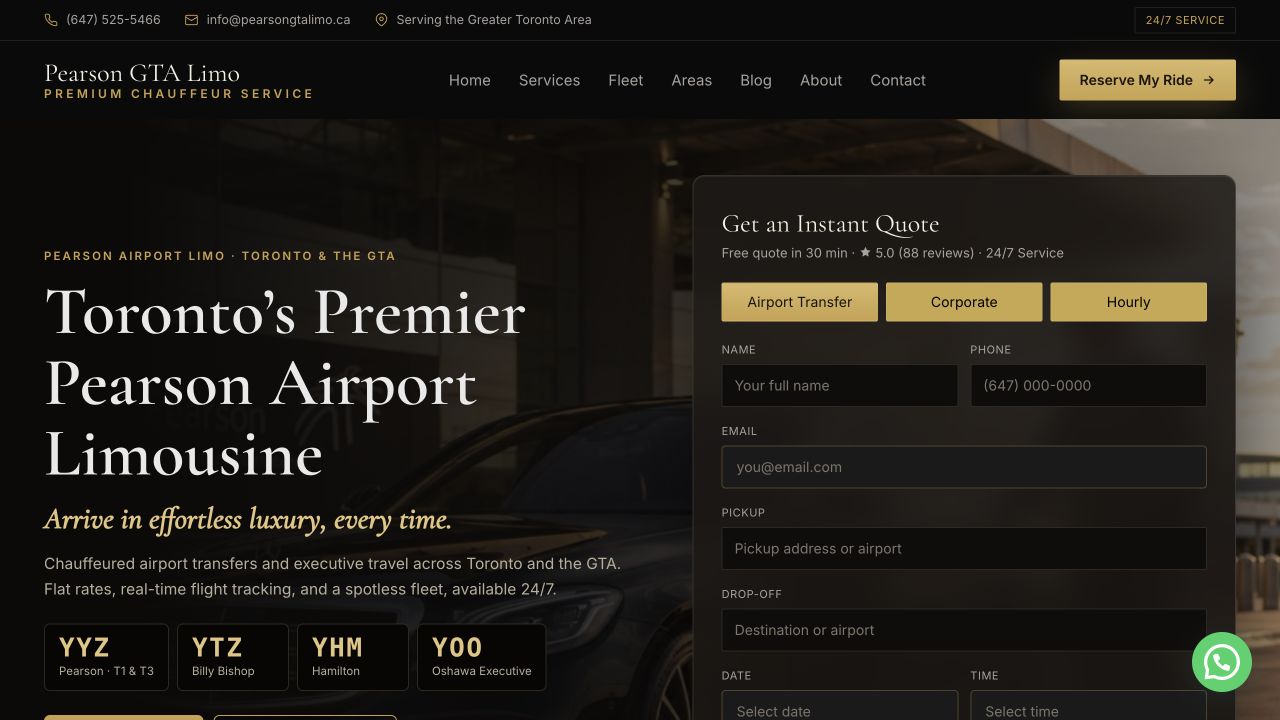
ranking searches kept through the Sept 2026 relaunch
82 city, 10 service and 13 route pages, with a 0.27s server response.
Read the case study ↗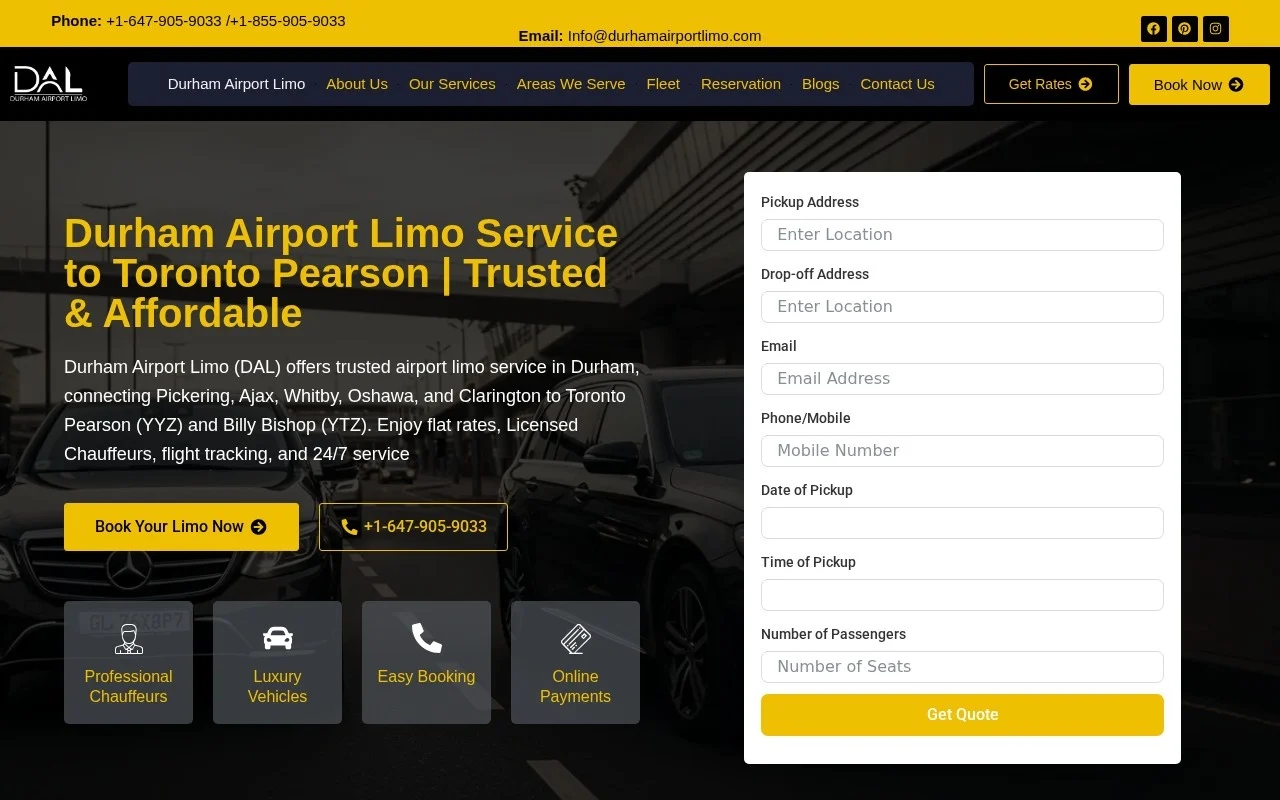
fake rating widgets removed across 32 pages
42 site defects fixed and every title and meta description rewritten.
Read the case study ↗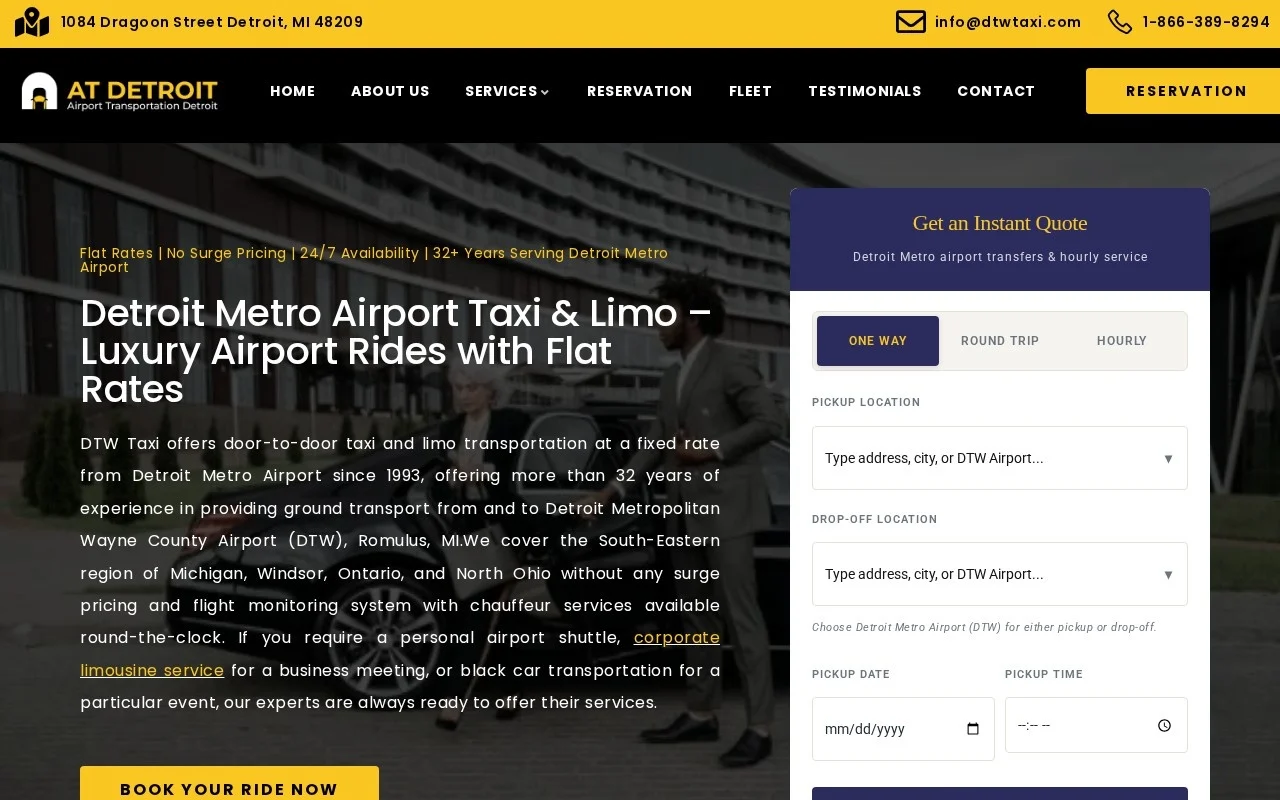
Google search clicks in Sept 2026
Flat rates published for 262 cities, and city pages rewritten to be unique.
Read the case study ↗